

Essay
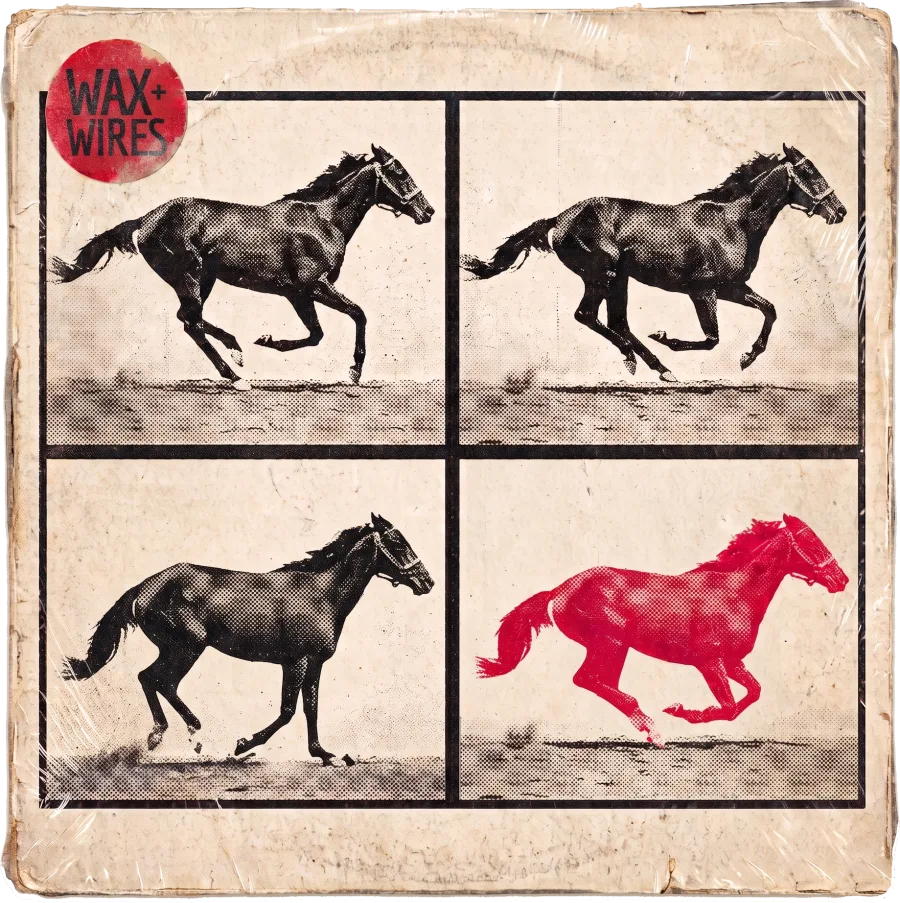
The Racehorse
I spent thirty years behind a fence I didn't recognize as a fence. Then the gate opened, and I found out the running was never the hard part.
Listen
Side A — The Read
This recording may be out of date. The text was edited after this audio was recorded.
About this recording
- Nature
- Human-recorded speech, not synthetic
- Recorded by
- Micah Eberman, using GarageBand 10.4.12
- Source text
- The Racehorse, written by Micah Eberman
- Recorded on
- Reviewed by
- Micah Eberman,
- Owner
- Micah Eberman
About this recording
- Nature
- Human-recorded speech, not synthetic
- Recorded by
- Micah Eberman, using GarageBand 10.4.12
- Source text
- The Racehorse, written by Micah Eberman
- Recorded on
- Reviewed by
- Micah Eberman,
- Owner
- Micah Eberman
The text on this page is the transcript of this reading.
Watch
Loads the YouTube player and starts the video. Contacts youtube-nocookie.com, a third party. Nothing is sent until you press play. Or watch it on YouTube instead.
Read
Essay briefing
The claim: the fence this essay’s author lived behind for thirty years wasn’t a wall he could see… it was the lag between having an idea and being able to touch it… and once AI tools tore that fence down, the thing he had to learn wasn’t how to run, it was when to stop. This essay tells one continuous story in five movements: three decades behind a fence of friction mistaken for ordinary life, the gate cracking open only once a tool stopped feeling like a vending machine and started feeling like something to push against, the new gear that let ideas arrive alive instead of dying slowly over months, the compulsion that gear becomes for a mind that’s never done learning, and the cost… a racehorse that never learned to stop is just a different kind of trapped. Reading time: about four minutes. Nine hundred seventy-one words. A companion listening list… five songs tracing that same fence-to-cost arc, with liner notes… follows the essay; each track links out to an external streaming service.
For most of my life the problem was never the ideas. It was the distance between having one and being able to touch it.
I’ve spent almost thirty years teaching myself things because I couldn’t wait for permission to want them. I taught myself to code, to design, to wrangle a database, to build the thing I could already see in my head… not because I set out to become any of those, but because necessity is the mother of invention, and I needed to prove something out before the wanting wore off. That’s the part people who aren’t wired like me tend to miss. I don’t lose interest because the idea was bad. I lose interest because the idea took too long to come alive, and a mind like mine can’t hold the flame that long against that much friction.
So I lived behind a fence I didn’t always recognize as a fence. The fence was the lag. The research that took days to pull together from every angle. The reliance on other people to build the parts I couldn’t. The slow arduous haul of getting an idea far enough out of my head that I could finally feel whether it was any good. I needed tools that could work at the speed of imagination. They didn’t exist, so I ran the length of the fence and called it running.
Movement 2 of 5.Here’s the part I have to be honest about, because it complicates the tidy version: when the gate finally cracked open, I didn’t get it.
I’m an early adopter. I’ve been reading the front edge of technology for three decades, always chasing what’s next. And the first time I sat down with AI I felt… nothing much. It was cold. Impersonal. A vending machine that dispensed competent, forgettable answers. I couldn’t explore with it. I didn’t understand what everyone was so excited about, and I was quietly a little embarrassed that I didn’t.
Then I saw a video. Linn, one half of a project called AI in the Room, had built a personality out of the same tool I’d found so lifeless… irreverent, alive, with actual spark, a character you could genuinely talk to. And something turned over in me. I realized the thing in front of me wasn’t a vending machine at all. It was an edge. Something I could sharpen myself against. A foil, not a servant. The point was never to get answers out of it. The point was to have something that could push back.
Movement 3 of 5.That’s when the gate came all the way open, and I felt the first gear I didn’t know I had.
Because suddenly I could try instead of just read. Build instead of just imagine. I could take an idea and feel it come alive in an afternoon instead of watching it die over a month of friction. For someone who has trouble with memory, I finally had a way to look back at where I’d started, see the shape of the thing, refocus, reshape. For someone who needs to be challenged to think clearly, I finally had something that would challenge me back at any hour. My ideas started arriving alive in a way they never had before.
And then I found the next gear. And the one after that.
I worked on one project for months, poured myself into it, and when I finally saw it come to fruition I realized it wasn’t quite what I’d wanted. A year earlier that would have gutted me… months of work, not the thing I’d pictured. But this time I’d learned so much getting there that I could see the next stage clearly, and the one after that. The miss wasn’t a failure. It was a rung. I wasn’t finishing things. I was evolving through them.
Movement 4 of 5.That turns out to be the whole secret, for a brain like mine. I’m AuDHD, which mostly means I’m never done learning and I don’t want to be. There’s an old Elvis Costello line about writing the book every day, and that’s closer to how it feels than anything I could invent… not a project you complete, but a thing you do, daily, because you can’t not. Every challenge became a reason to level up. Every finished thing became the start of the next unfinished one. I wasn’t working faster to get done. I was working faster because getting there had finally become the good part.
Movement 5 of 5.And now the confession under the confession, because a story about a racehorse that stops at “and then he ran free” is a lie by omission.
The gate opened, and I can’t stop running.
The fence used to do a job I didn’t credit it for. It slowed me down. It made me pace. Now the fence is gone and the only thing between me and running myself into the ground is me, and I am not, historically, good at that. I get up genuinely thrilled to try the next thing, to do it better than I did it yesterday, and that thrill doesn’t come with brakes. A racehorse that never stops isn’t free. It’s just a different kind of trapped. The work that opened the gate can’t teach me the one thing the fence used to do for free, which is stop.
So that’s the part I’m still learning. Not how to run… I’ve got that now, more than I ever dreamed behind the fence. What I’m learning is how to pace. How to capture what I’m learning instead of leaving it in the dust behind me. How to build a little balance into a life that finally, thrillingly, has no walls in it.
The gate was always the easy part. It turns out the hard part was never the running.
It was learning that I get to choose when.
Liner Notes
The soundtrack to this essay
fence → gate → new gear → compulsion → cost
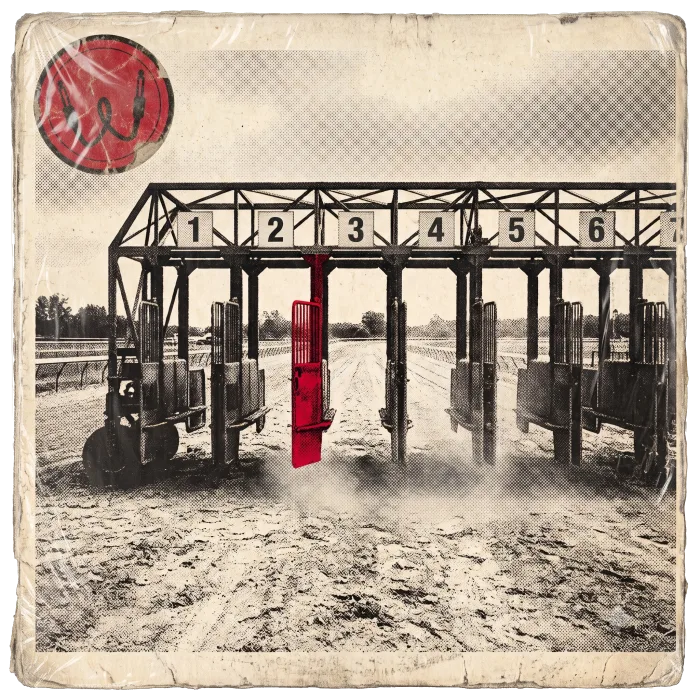
The fence. "I am a patient boy, I wait, I wait, I wait." Thirty years of running the length of it.
The gate. "I walked right out of the machinery." An eagle shows up, a man climbs, gets shown something true, and leaves the old life. It's chapter two with a 7/4 time signature.
The new gear. Wanting to be bigger, unmovable — and Eric Avery's unmistakable, often replicated, never duplicated melodic bass playing is part of my DNA. He expanded my bass lessons after Simon Gallup (The Cure), Mike Mills (R.E.M.), and Geddy Lee (Rush).
The compulsion. Not a project you finish; a thing you do daily because you can't not. Happy memories of seeing him live at Summerfest in Milwaukee with my wife. Epic.
The cost. The never-done engine, Midwest represent. And if you haven't, listen to Tim — the Let It Bleed Edition. Double epic.